
The first researches on the application of electronic and digital technologies to sound and music at the University of Padova date back to the 1960s, and led to the foundation of the "Centro di Sonologia Computazionale" (CSC) in 1979. Since 2009, the CSC is part of the Department of Information Engineering.
The activities of the CSC include scientific research, music production, education (and dissemination). CSC is an antidisciplinary laboratory: isn't a sum of a bunch of disciplines (information engineer, computer science, musicology, music theory, psychology, acoustics, philosophy) but something entirely new — the word defies easy definition. But what it means is a laboratory that doesn't fit within traditional academic discipline — a field of study with its own particular words, frameworks, and methods. Antidisciplinary research is akin to mathematician John von Neumann’s famous observation that attempting to develop a theory of non-equilibrium systems is like attempting to develop ‘a theory of non-elephants’. At CSC we study the non-elephant animals. Music is a transcultural language, and, taking advantage of this, CSC aims at facilitating the inclusion of people with disabilities (e.g., Multimodal interaction for Learning and Well-Being, Acoustic analysis for Safety and Security in the Workplace) and the dialogue among different cultures and populations (Production of New Cultural Events, Computing and Cultural Heritage, Audio documents: preservation and valorization, Computational Creativity, Speech).
The CSC labs are immersed in the cultural context in which the center was born and foster the stimulation of technological transfer to the market (thanks to AudioInnova, CSC spin-off), to involve researchers in the development of new musical ideas, and musicians as sources of creativity in scientific research. CSC attracts researchers and musicians who carry out research, production and teaching activities jointly.
The CSC collaborates with many organizations, both at a national and international level. Teaching activities include the course "Computer Engineering for Music and Multimedia" within the Master Degree in Computer Engineering, the supervision of Ph.D. students, and the hosting of Erasmus students in collaboration with our European partners.
The CSC archive is included in "Rete degli Archivi del Veneto".
References:
- Sara Giuriati, Anna Zuccante, Alessandro Russo, Alessandro Fiordelmondo, Matteo Spanio, Antonio Rodà and Sergio Canazza (2026). Artificial Intelligence for Musical Cultural Heritage: Preservation, Interpretation, and Human-Centered Creativity at the Centro di Sonologia Computazionale. Heritage, 9(9), 344. https://doi.org/10.3390/heritage9090344
- Sergio Canazza, Giovanni De Poli and Alvise Vidolin. Gesture, Music and Computer: The Centro di Sonologia Computazionale at Padova University, a 50-Year History. Sensors. 2022; 22(9):3465. https://doi.org/10.3390/s22093465
- Sergio Canazza, Giovanni De Poli and Alvise Vidolin. I primi 40 anni del Centro di Sonologia Computazionale di Padova. Un intreccio di saperi tra ricerca scientifica, creatività musicale e alta formazione. Cleup. Collana: Ingegneria industriale e dell'informazione. ISBN: 9788854953314. 2020.
https://www.cleup.it/product/22028892/i-primi-40-anni-del-centro-di-sonologia-computazionale-di-padova - Sergio Canazza and Giovanni De Poli. Four decades of music research, creation, and education at Padua’s Centro di Sonologia Computazionale. Computer Music Journal, 43(4):58–80, 2020. https://doi.org/10.1162/comj_a_00537
VIDEO
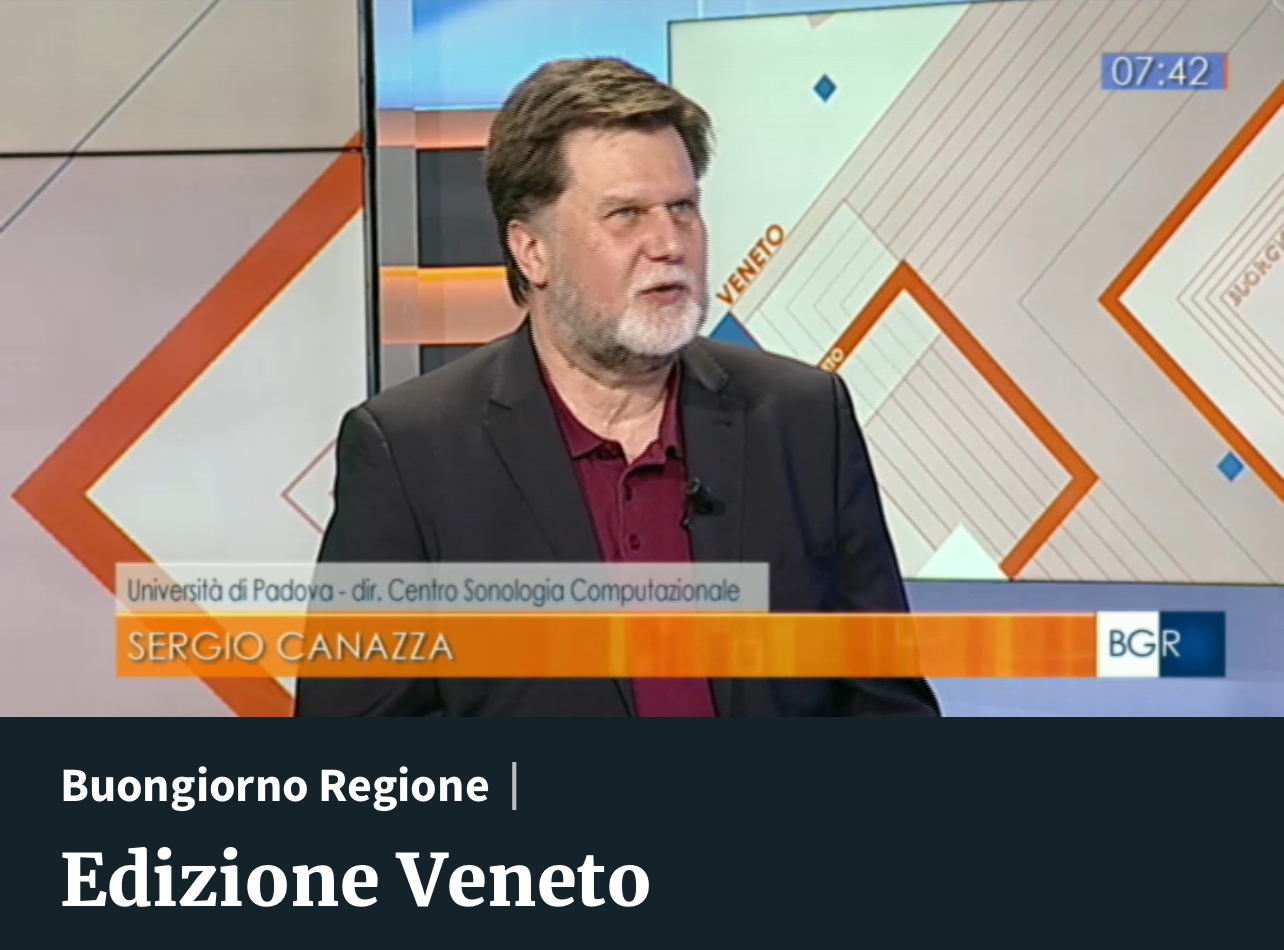
- RAI Buongiorno Veneto, report from Italian national broadcasting company (RAI) on CSC, with the participation of Sergio Canazza.
- TGR Veneto, report from Italian national broadcasting company (RAI) on CSC, after the Creative AI Trophy winning (for the second time) at the World Artificial Intelligence Cannes Festival (WAICF), with the participation of Sergio Canazza, Alessandro Russo, Anna Zuccante, and Giada Zuccolo.
credits to Federica Riva, on 12/02/2024 - (in italian)
News From our Facebook Page:

Un’occasione speciale per riscoprire la storia del CSC - Centro di Sonologia Computazionale - UNIPD attraverso le sue tecnologie, le sue opere e le voci di chi l’ha costruita, riportando all’ascolto il patrimonio della musica sperimentale attraverso i suoi supporti originali. 🎶📅 Mercoledì 30 settembre – Open Art Archive | Il Centro di Sonologia Computazionale
This content isn't available right now
When this happens, it's usually because the owner only shared it with a small group of people, changed who can see it or it's been deleted.
𝗥𝗶𝗱𝗮𝗿𝗲 𝘃𝗼𝗰𝗲 𝗮𝗹 𝗽𝗮𝘁𝗿𝗶𝗺𝗼𝗻𝗶𝗼 𝗺𝘂𝘀𝗶𝗰𝗮𝗹𝗲: 𝗹𝗮 𝘀𝗰𝗶𝗲𝗻𝘇𝗮 𝗱𝗶𝗲𝘁𝗿𝗼 𝗮𝗹 𝗿𝗲𝘀𝘁𝗮𝘂𝗿𝗼Come si può riportare in vita un patrimonio musicale antico e restituirgli una nuova voce?Sabato 𝟮𝟲 𝘀𝗲𝘁𝘁𝗲𝗺𝗯𝗿𝗲 𝗮𝗹𝗹𝗲 𝗼𝗿𝗲 𝟭𝟱:𝟬𝟬, nella 𝗦𝗮𝗹𝗮 𝗱𝗲𝗹𝗹𝗲 𝗘𝗱𝗶𝗰𝗼𝗹𝗲 𝗱𝗶 𝗣𝗮𝗹𝗮𝘇𝘇𝗼 𝗱𝗲𝗹 𝗖𝗮𝗽𝗶𝘁𝗮𝗻𝗶𝗼, il Festival Pianistico Internazionale Bartolomeo Cristofori propone un nuovo 𝗕𝗮𝗿𝘁𝗼𝗹𝗼𝗧𝗮𝗹𝗸 dedicato al progetto 𝗣𝗮𝗙𝗶𝗥𝗼 e al rapporto tra ricerca scientifica, tecnologia e conservazione degli strumenti musicali. A raccontare questo affascinante percorso saranno:🎹 𝗦𝗼𝗻𝗶𝗮 𝗠𝗮𝗿𝘁𝗼𝗻𝗲, Direttrice del Museo Nazionale degli Strumenti Musicali di Roma🎹 𝗦𝘁𝗲𝗳𝗮𝗻𝗼 𝗙𝗶𝘂𝘇𝘇𝗶, Direttore artistico dell’Accademia Cristofori di Firenze🔬 𝗦𝗲𝗿𝗴𝗶𝗼 𝗖𝗮𝗻𝗮𝘇𝘇𝗮, docente dell’Università di Padova e direttore del CSC - Centro di Sonologia Computazionale - UNIPD Un’occasione per scoprire cosa accade quando 𝗺𝘂𝘀𝗶𝗰𝗮, 𝘀𝗰𝗶𝗲𝗻𝘇𝗮, 𝘁𝗲𝗰𝗻𝗼𝗹𝗼𝗴𝗶𝗮 𝗲 𝗰𝗼𝗻𝘀𝗲𝗿𝘃𝗮𝘇𝗶𝗼𝗻𝗲 𝗱𝗲𝗹 𝗽𝗮𝘁𝗿𝗶𝗺𝗼𝗻𝗶𝗼 𝗰𝘂𝗹𝘁𝘂𝗿𝗮𝗹𝗲 si incontrano: non soltanto restaurare uno strumento, ma comprendere come restituirgli la possibilità di raccontare nuovamente la propria storia attraverso il suono.L'ingresso è gratuito e l'incontro rappresenta un appuntamento particolarmente interessante per chi vuole conoscere il lavoro che sta dietro alla conservazione e alla valorizzazione del patrimonio musicale. 📅 Sabato 26 settembre 2026🕒 Ore 15:00–16:30📍 Sala delle Edicole – Palazzo del Capitanio, Piazza Capitaniato 3, Padova🎟️ Ingresso gratuito👉 Scopri l’evento e partecipa:cristoforipianofestival.it/evento/26-09-2026-bartolotalk/#CSCPadova #CentroDiSonologiaComputazionale #UniversitàDiPadova #FestivalCristofori #BartoloTalk #PaFiRo #Restauro #PatrimonioMusicale #Musica #Ricerca #Tecnologia #Conservazione #Padova
o🎶 𝗜𝗹 𝗖𝗦𝗖 𝘁𝗼𝗿𝗻𝗮 𝗮 𝗦𝗰𝗶𝗲𝗻𝗰𝗲𝟰𝗔𝗹𝗹. 𝗘 𝗾𝘂𝗲𝘀𝘁’𝗮𝗻𝗻𝗼 𝗰’𝗲̀ 𝗮𝗻𝗰𝗼𝗿𝗮 𝗽𝗶𝘂̀ 𝗱𝗮 𝘀𝗰𝗼𝗽𝗿𝗶𝗿𝗲.Il 𝟮𝟲 𝗲 𝟮𝟳 𝘀𝗲𝘁𝘁𝗲𝗺𝗯𝗿𝗲, l’Aula degli Studenti di Palazzo del Bo si trasformerà ancora una volta in uno spazio dove 𝘀𝗰𝗶𝗲𝗻𝘇𝗮, 𝘁𝗲𝗰𝗻𝗼𝗹𝗼𝗴𝗶𝗮 𝗲 𝗺𝘂𝘀𝗶𝗰𝗮 𝘀𝗶 𝗶𝗻𝗰𝗼𝗻𝘁𝗿𝗮𝗻𝗼.Ma quest’anno il CSC porta a Science4All qualcosa ancora più innovativo. Quest'anno potrete 𝘃𝗲𝗱𝗲𝗿𝗲, 𝗮𝘀𝗰𝗼𝗹𝘁𝗮𝗿𝗲, 𝘁𝗼𝗰𝗰𝗮𝗿𝗲 𝗲 𝘀𝗽𝗲𝗿𝗶𝗺𝗲𝗻𝘁𝗮𝗿𝗲:• 🎨 𝗟’𝗼𝗽𝗲𝗿𝗮 𝗮𝗿𝘁𝗶𝘀𝘁𝗶𝗰𝗮 𝗽𝗿𝗲𝘀𝗲𝗻𝘁𝗮𝘁𝗮 𝗮𝗹 𝗣𝗮𝗱𝗶𝗴𝗹𝗶𝗼𝗻𝗲 𝗔𝗿𝗴𝗲𝗻𝘁𝗶𝗻𝗮 𝗱𝗲𝗹𝗹𝗮 𝗕𝗶𝗲𝗻𝗻𝗮𝗹𝗲 𝟮𝟬𝟮𝟲• 🏺 𝗜𝗹 𝗺𝗼𝗱𝗲𝗹𝗹𝗼 𝗺𝘂𝗹𝘁𝗶𝘀𝗲𝗻𝘀𝗼𝗿𝗶𝗮𝗹𝗲 𝗱𝗶 𝘂𝗻 𝗮𝗻𝘁𝗶𝗰𝗼 𝘀𝗼𝗻𝗮𝗴𝗹𝗶𝗼 𝗲𝘁𝗿𝘂𝘀𝗰𝗼• 👅 𝗜𝗹 𝘀𝗼𝗻𝗶𝗰 𝘀𝗲𝗮𝘀𝗼𝗻𝗶𝗻𝗴, per scoprire come il suono può modificare la percezione del gusto• 🎚️ 𝗨𝗻 𝘃𝗲𝗿𝗼 𝗺𝗮𝗴𝗻𝗲𝘁𝗼𝗳𝗼𝗻𝗼, per ascoltare musica attraverso una tecnologia che oggi appartiene alla storia — sì, la musica esisteva anche prima di Spotify!• 💻 𝗜 𝗹𝗶𝗻𝗴𝘂𝗮𝗴𝗴𝗶 𝗱𝗲𝗹𝗹𝗮 𝗖𝗼𝗺𝗽𝘂𝘁𝗲𝗿 𝗠𝘂𝘀𝗶𝗰, da scoprire e interpretare insiemeDue giorni per entrare nel mondo del CSC - Centro di Sonologia Computazionale - UNIPD e incontrare una ricerca che mette in dialogo 𝗶𝗻𝗻𝗼𝘃𝗮𝘇𝗶𝗼𝗻𝗲 𝘁𝗲𝗰𝗻𝗼𝗹𝗼𝗴𝗶𝗰𝗮, 𝗽𝗮𝘁𝗿𝗶𝗺𝗼𝗻𝗶𝗼 𝗰𝘂𝗹𝘁𝘂𝗿𝗮𝗹𝗲, 𝗽𝗲𝗿𝗰𝗲𝘇𝗶𝗼𝗻𝗲, 𝗮𝗿𝘁𝗲 𝗲 𝗺𝘂𝘀𝗶𝗰𝗮.📅 26–27 settembre 2026📍 Aula degli Studenti, Palazzo del Bo – Padova🌐 science4all.it𝗩𝗲𝗻𝗶𝘁𝗲 𝗮 𝘁𝗿𝗼𝘃𝗮𝗿𝗰𝗶 𝗮𝗹 𝗕𝗼. 𝗩𝗶 𝗮𝘀𝗽𝗲𝘁𝘁𝗶𝗮𝗺𝗼!#Science4All #CSC #CentroDiSonologiaComputazionale #ComputerMusic #UniversitàDiPadova #MusicTechnology #Sound #Research #Innovation #DepartmentInformationEngineering #unipd #deiunipd #dipartimentodei
Science4All - La Festa delle Scienze a Padova
science4all.it
Science4All è un progetto di comunicazione scientifica rivolto alla cittadinanza e alle scuole, che comunica la scienza in modo semplice e divertente a tutte e tutti.
CSC - Centro di Sonologia Computazionale
